Diane Ratkovich is the founder of Stable Wisdom Family Coaching. She works with parents of children, adolescents and young adults to strengthen communication, rebuild connection, and create healthier family relationships. Her approach combines professional expertise with lived experience, helping families move beyond crisis toward greater trust, understanding, and resilience.
Diane’s passion for family coaching grew from her own parenting journey. Raising raising her two teenagers, each with very different needs, she often felt that she was on a roller coaster ride that never ended. She searched for balance to strengthen her the family as a whole.
She found a Coach and with guidance, she learned to step out of the chaos, adjust her expectations to honour each child’s individuality, and let go of unnecessary control,. She was able to get her her life back. Horses also played a part in her finding peace.
That experience became the foundation for Stable Wisdom Family Coaching.
Diane holds a Master’s Degree in Human Development from the Erikson Institute. She has completed extensive study and certification in Equine Facilitated Learning through Eponaquest Worldwide (Linda Kohanov) and Spirit of Leadership (Jackie Stevenson). She is also a certified Family Mediator.
She has professional experience as an Adoption Advocate and Family Support Professional in a variety of roles throughout her career.
What are the Key Differences Between Coaching and Therapy?
Coaching and therapy are both powerful tools for personal growth, but they serve different purposes. While therapy primarily focuses on healing the past and understanding deep-rooted patterns, coaching is about action, goal-setting and future-focused growth. The two approaches complement each other, often working in tandem to help people create meaningful change in their lives.
Buck Brannaman, a pioneer of the “horse whispering” movement, famously said, “The horse is a mirror to your soul.” Horses possess a unique ability to help us access our internal wisdom. In their presence, we often find relief from rigid, “hard-wired” thinking, opening a door to creative problem-solving and a deeper connection to the life we truly want. Through the guidance of the horse, we can expand our emotional agility, strengthen connections with loved ones, and map out a sustainable path to well-being.
Consider Sue, who came to Stable Wisdom during a period of deep conflict with her teenage daughter, Karina. The more Sue tried to help, the more Karina pushed her away. Despite Sue’s deep care and desire for her daughter’s success, every day felt like a new battleground.
A lifelong city dweller, Sue had never spent time around horses or in nature. Yet, she felt an intuitive pull toward Stable Wisdom, sensing a horse might offer the breakthrough she needed. After an introduction to our approach, Sue was eager to begin. She chose to work with Raleigh, the largest and most headstrong horse in the herd.
Setting a goal to lead Raleigh across the pasture, Sue started off quickly, giving a sharp tug on the lead line. Raleigh immediately planted his feet. Sue tried everything: verbal demands, physical pushes, and even “sweet talk” accompanied by handfuls of grass. Nothing worked. Eventually, the frustration boiled over; Sue burst into tears, feeling like a failure.
She leaned into Raleigh for comfort, patting him as she sobbed. Almost instantly, Raleigh softened. As Sue’s energy shifted from control to genuine connection, Raleigh took a few steps forward. They began to walk side-by-side through the pasture, moving in sync. When Raleigh finally turned to head back, Sue turned with him, no longer fighting for the lead.
They returned smiling. In that moment, Sue recognized the pattern she had been repeating with Karina: the harder she pushed, the more resistance she met. By changing her approach and letting go of the need to “order” the outcome, Sue was able to rebuild her connection with her daughter.
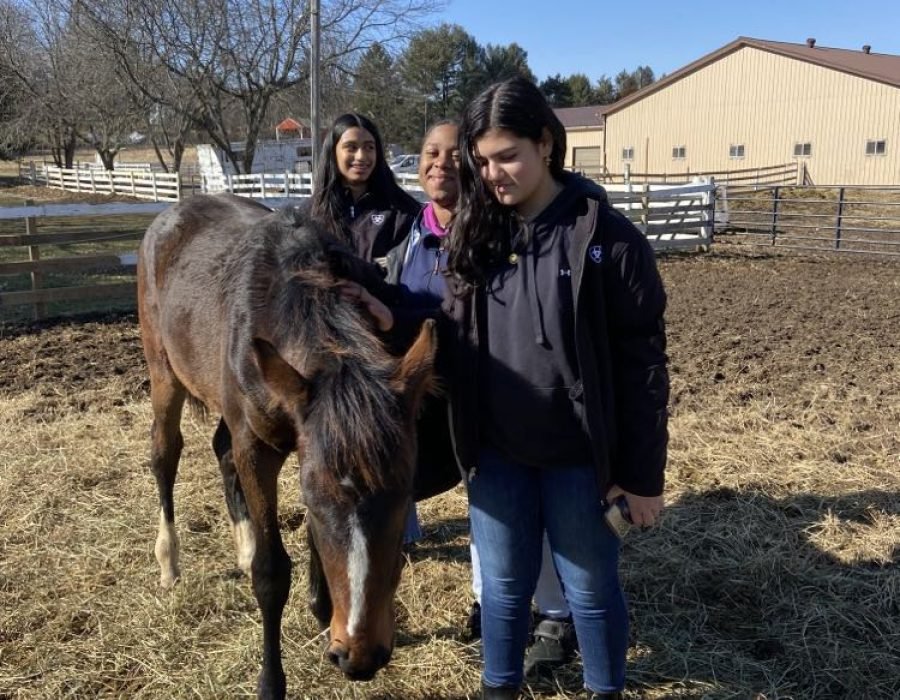
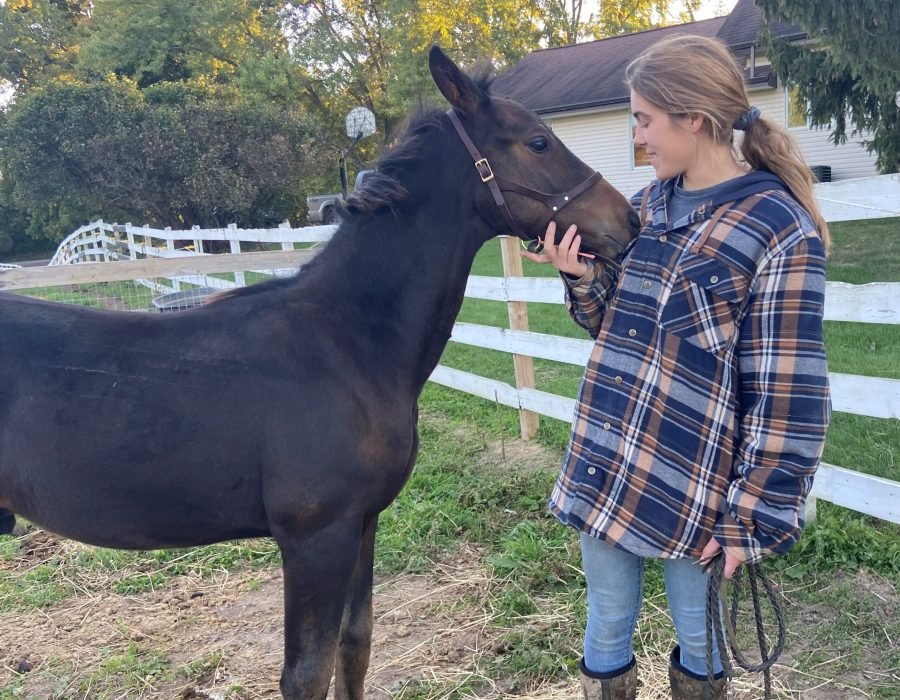
Horses provide a unique, non-judgmental environment that helps you connect with your inner wisdom for sustainable change. At Stable Wisdom, we guide you in observing, reflecting, caring for, and playing with these remarkable animals.
The shift in Sue’s experience highlights three core reasons why equine-assisted coaching is so powerful:
Raleigh didn’t move when Sue was using “fake sweet talk” or forceful demands because her internal state (anxiety and a need for control) didn’t match her external behavior. In the horse’s world, incongruence feels like a threat. It wasn’t until Sue became vulnerable and honest with her emotions that Raleigh felt it was safe to connect with her.
As Buck Brannaman noted, horses mirror our internal state. When we are tight and demanding, they become braced and “stubborn.” When we soften and breathe, they often do the same. This provides an immediate, non-judgmental feedback loop that helps humans recognize patterns—like Sue’s “tug-of-war” with her daughter—that are otherwise invisible in daily life.
Horses live in a state of constant environmental awareness, but they are masters at returning to “grazing mode” once a threat has passed. By working with them, humans can learn to:
Metabolize stress: Move from a “fight or flight” response to a state of calm.
Build emotional agility: Navigate fear or frustration without becoming stuck in those emotions.
Develop presence: Stay focused on the moment rather than ruminating on the past or worrying about the future.
Sue’s success didn’t come from mastering a technical skill; it came from “moving towards peace.” That transition from control to connection is the fundamental lesson horses offer for our human relationships.